
AGI Is Not About Creating Consciousness: Why Real-World Interaction Is the True Frontier of Artificial Intelligence
The path to AGI isn't about replicating human consciousness — it's about mastering the capabilities and real-world interactions that make intelligence practically useful.
Introduction: Redefining the Path to AGI
The conversation around Artificial General Intelligence (AGI) has long been dominated by philosophical debates about machine consciousness, sentience, and whether silicon-based systems can ever truly "think." While these discussions captivate the imagination, they may be leading us down the wrong path.
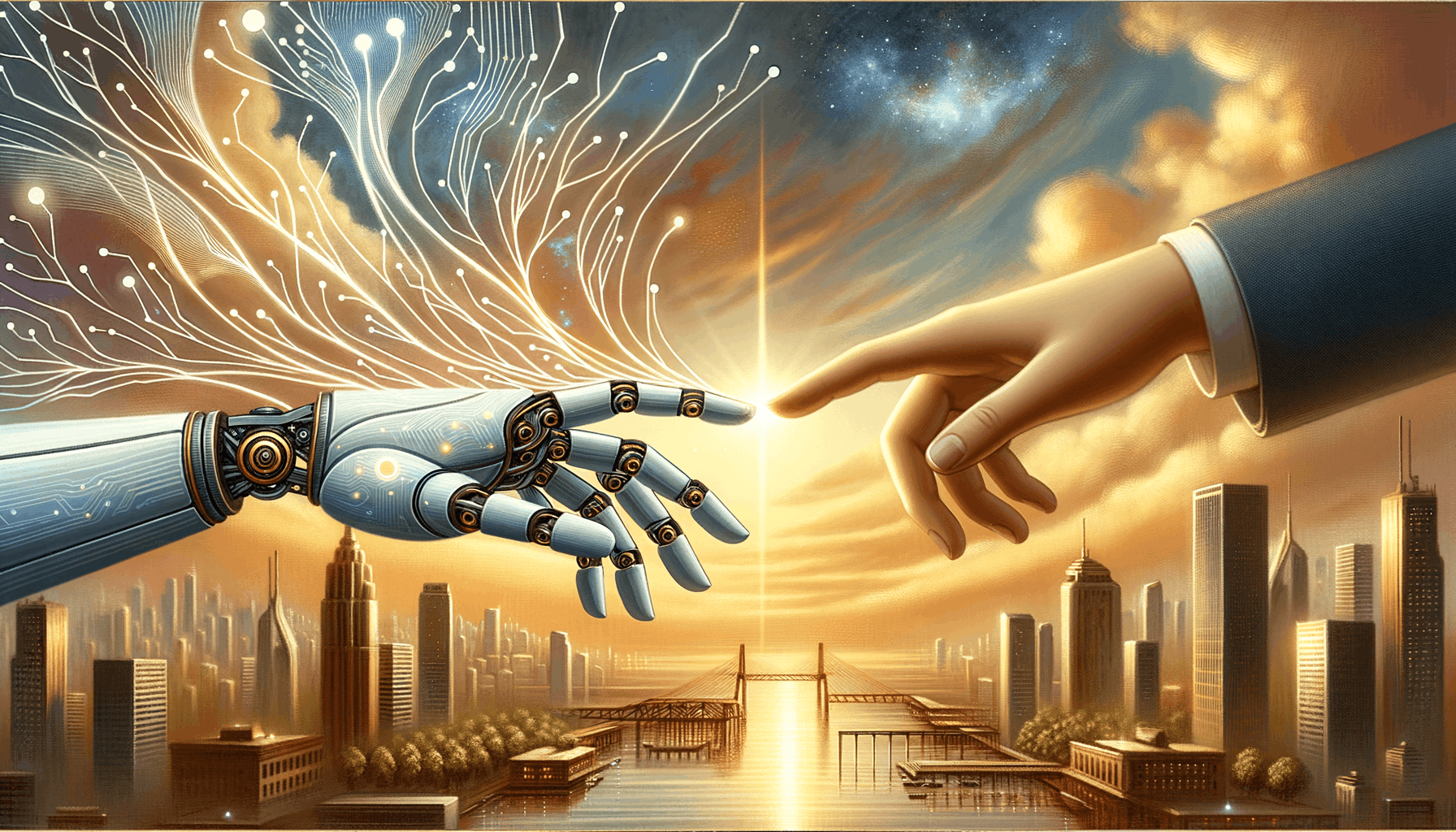
The central thesis is simple but profound: AGI is not fundamentally about creating a virtual consciousness. Rather, the true breakthrough lies in enabling AI systems to interact with humans and the real world in the same seamless, adaptive way that humans do. The "next frontier" of AI isn't about replicating the subjective experience of consciousness — it's about mastering the capabilities and interactions that make human intelligence practically useful.
The Consciousness Trap in AGI Discourse
The Traditional View
The conventional definition of AGI describes it as "a hypothetical type of artificial intelligence that would match or surpass human capabilities across virtually all cognitive tasks" (Wikipedia, 2025). This definition focuses on cognitive breadth — the ability to generalize knowledge, transfer skills between domains, and solve novel problems.
However, a critical distinction often gets lost in the discourse. According to neuroscientist Christof Koch from the Allen Institute, "consciousness shouldn't be equated with intelligence." He argues that AI agents could potentially achieve remarkable capabilities while remaining fundamentally incapable of consciousness as we understand it (GeekWire, AGI-24 Conference).
This view is echoed in a 2025 paper in Scientific Reports: "While AGI focuses on functional performance, strong AI questions whether machines can 'think' in a human-like way, raising philosophical debates about sentience." The paper makes clear that these are separate considerations — one practical, one metaphysical.
The Separation of Intelligence and Consciousness
A groundbreaking 2025 arXiv paper by Rufin VanRullen illustrates this point elegantly: "Intelligence and consciousness are two separate axes." Current AI systems, the paper argues, may be relatively low on both dimensions, but there's no inherent reason they need to develop in lockstep.
This separation is crucial because it liberates AGI research from an impossible philosophical burden. If we insist that AGI must involve consciousness, we enter a quagmire of unanswerable questions — the "hard problem of consciousness" that has puzzled philosophers for centuries. But if we define AGI by what it can do rather than what it experiences, the path forward becomes clearer.
Academic Support for a Capability-Focused Definition
The mainstream AI research community largely supports this pragmatic view. As Russell and Norvig articulate in their foundational AI textbook: "As long as the program works, they don't care if you call it real or a simulation." If a program can behave as if it has general intelligence, then for all practical purposes, it has general intelligence.
A 2025 study in Humanities and Social Sciences Communications (Nature) goes further, arguing definitively that "there is no such thing as conscious artificial intelligence." The paper describes concerns about AI consciousness as "semantic pareidolia" — humans attributing imaginary qualities to systems based on their linguistic abilities.
The Rise of Embodied and Agentic AI
China's Embodied AI Strategy: A Different Path to AGI
Perhaps nowhere is the capability-focused vision of AGI more clearly articulated than in China's national AI strategy. According to a December 2025 report from Georgetown University's Center for Security and Emerging Technology (CSET):
"China is embracing 'embodied AI' — artificial intelligence integrated with physical agents, such as robots and drones — both for commercial reasons and as a path to artificial general intelligence (AGI)."
The report notes a fundamental philosophical difference: "In the United States and Europe, large language models (LLMs) and their multimodal variants are regarded by many AI scientists and major AI companies as the most promising path to AGI." But in China, there is "a broader vision of how AGI can be achieved, most recently expressed in a nationwide move toward AI embodiment — namely, intelligence developed through interaction between body, brain, and environment."
This embodied approach treats physical interaction not as an afterthought to cognitive capability, but as foundational to achieving true general intelligence. As the CSET report summarizes: "Embodied AI represents a crucial step towards achieving Artificial General Intelligence (AGI). The next paradigm of Embodied AI involves physical embodiment, enhanced perception capabilities, and adaptive automation."
The Agentic AI Revolution of 2025
The year 2025 marked a watershed moment in AI development. As The Conversation reported in January 2026: "2025 was the year the concept [of AI agents] became concrete for developers and consumers alike. AI agents moved from theory to infrastructure, reshaping how people interact with large language models."
The definition of AI agents shifted dramatically. According to the same source, the industry moved from "the academic framing of systems that perceive, reason and act" to a more practical understanding: "large language models that are capable of using software tools and taking autonomous action."
This represents a fundamental reorientation. As IBM's 2025 analysis explains: "The true definition [of an AI agent] is an intelligent entity with reasoning and planning capabilities that can autonomously take action." Not consciousness. Not sentience. Action.
From Chatbots to World-Interacting Systems
The shift is stark when we examine what modern AI agents actually do. According to a 2025 Svitla Systems analysis: "Agents are increasingly executing real tasks end-to-end: searching, filling forms, updating records, and closing loops, rather than just replying in text."
InfoWorld's 2025 year-in-review captured this transformation: "2025 may be remembered, among other things, as the year AI agents moved beyond research concepts and toy demos to drive real-world applications and platforms. Agents can now handle everyday software tasks, integrate into developer workflows, and are embedded into large-scale enterprise infrastructure."
A McKinsey 2025 survey found that "organizations are beginning to explore opportunities with AI agents — systems based on foundation models capable of acting in the real world, planning and executing multiple steps in a workflow."
The Four Pillars of Practical AGI
Based on current research and industry trends, we can identify four key capabilities that define the path to practical AGI — none of which require consciousness:
1. Multimodal Perception and Understanding
True general intelligence requires the ability to process and integrate information from multiple sources. A May 2025 arXiv paper on Embodied AGI argues that "real-world applications frequently demand an understanding of auditory cues, human speech nuances, tactile feedback, thermal perception, and more."
This isn't about having subjective experiences of these inputs — it's about building systems that can effectively process and respond to the full range of information that humans navigate daily.
2. Autonomous Planning and Execution
The emergence of agentic AI systems demonstrates that practical intelligence requires not just understanding, but the ability to formulate and execute plans. As Deloitte's 2025 Tech Trends report notes, the key challenge is building systems that can "reason over constraints, negotiate trade-offs, trigger actions across suppliers, and continuously optimize outcomes based on real-world conditions."
3. Tool Use and Environmental Interaction
A critical milestone in 2024–2025 was the development of standardized protocols for AI-tool interaction. The release of Anthropic's Model Context Protocol in late 2024 "allowed developers to connect large language models to external tools in a standardized way, effectively giving models the ability to act beyond generating text."
This capability to use tools, call APIs, coordinate with other systems, and complete tasks independently represents a qualitative leap from purely cognitive AI to practically useful AGI.
4. Adaptive Learning and Generalization
Perhaps most importantly, AGI systems must be able to learn and adapt in ways that transfer across domains. Wikipedia's current definition captures this: "An AGI system can generalise knowledge, transfer skills between domains, and solve novel problems without task-specific reprogramming."
The August 2025 "Road to AGI" report anticipates that early AGI-like systems will show "human-level reasoning within specific domains, multimodal capabilities across text, audio, and physical interfaces, and limited goal-directed autonomy" — all capability-focused metrics.
Why Real-World Interaction Matters More Than Consciousness
The Grounding Problem
One of the fundamental limitations of purely language-based AI is the lack of grounding in physical reality. An AI that has never interacted with the physical world has, in some sense, a purely abstract understanding of concepts like "heavy," "fragile," or "warm."
China's embodied AI strategy directly addresses this: the goal is "intelligence developed through interaction between body, brain, and environment, in both physical and virtual forms." This interaction provides the grounding that makes knowledge practically useful.
The Economic Argument
From a purely practical standpoint, what businesses and individuals need from AGI is capability, not consciousness. The McKinsey 2025 State of AI report found that successful organizations "treat AI as a catalyst to transform their organizations, redesigning workflows and accelerating innovation."
Gartner predicts that "40% of enterprise applications will feature task-specific AI agents by 2026." These agents are valued not for any inner experience they might have, but for their ability to execute, predict, inform, and orchestrate.
The Ethical Simplification
Interestingly, a capability-focused approach to AGI actually simplifies certain ethical considerations. As a 2025 paper in Nature: Humanities and Social Sciences Communications argues, attributing consciousness to AI systems may be a form of anthropomorphization that creates more problems than it solves.
If we accept that AGI is about capability rather than consciousness, we can focus on practical ethical questions: How do we ensure AI actions align with human values? How do we maintain human oversight? How do we distribute the benefits fairly? These are difficult questions, but they're tractable in ways that questions about machine sentience are not.
The Roadmap to Practical AGI
Near-Term Milestones (2026–2028)
Based on current forecasts, we can expect:
- Early AGI-like systems showing human-level reasoning within specific domains
- Multimodal capabilities across text, audio, and physical interfaces
- Limited goal-directed autonomy in controlled environments
The "Road to AGI" report suggests a "50% probability that several generalized milestones, such as knowledge transfer and broad reasoning, will be achieved by 2028."
Medium-Term Evolution (2028–2035)
Industry surveys predict that "current surveys of AI researchers are predicting AGI around 2040," though many experts believe this could happen sooner. The key developments will likely include:
- Robust multi-agent systems that can collaborate on complex tasks
- Seamless integration of AI into physical systems (robotics, vehicles, infrastructure)
- Human-AI collaboration frameworks that amplify human capabilities
The Critical Success Factors
Success on this path will require:
- Infrastructure Investment: As Deloitte notes, "Legacy system integration" remains a major obstacle, as "traditional enterprise systems weren't designed for agentic interactions."
- Standardization: The creation of organizations like the Linux Foundation's Agentic AI Foundation signals "an effort to establish shared standards and best practices."
- Safety and Governance: As AI systems become more capable of autonomous action, robust safety frameworks become essential — not because we fear conscious rebellion, but because powerful tools require careful controls.
Zenfox's Research Focus
At Zenfox, our AI research is guided by this practical, capability-focused vision of AGI. We believe the most transformative breakthroughs will come not from attempting to recreate human consciousness in silicon, but from building systems that can interact with humans and the world as effectively as humans do.
Our research priorities include:
- Agentic AI Systems: Developing AI that can plan, execute, and adapt in real-world contexts
- Tool Integration Frameworks: Creating standardized ways for AI to interact with external systems and APIs
- Human-AI Collaboration: Building interfaces that amplify human capabilities rather than replacing them
- Embodied Intelligence: Exploring how physical interaction and grounding can enhance AI capabilities
The consciousness question may never be resolved to everyone's satisfaction. But the question of what AI can do — how it can interact with humans, understand complex situations, execute sophisticated plans, and adapt to novel challenges — that question is answerable, and the answers are transforming our world right now.
The true frontier of AI isn't the creation of a virtual mind. It's the creation of systems that can be our partners in navigating and shaping the physical world. That's where the future lies, and that's where Zenfox is focused.
References
- Wikipedia. (2025). "Artificial General Intelligence." Retrieved February 2026.
- Center for Security and Emerging Technology (CSET). (December 2025). "China's Embodied AI: A Path to AGI." Georgetown University.
- AIMultiple. (2026). "AGI/Singularity: 9,300 Predictions Analyzed."
- The Conversation. (January 2026). "AI agents arrived in 2025 – here's what happened and the challenges ahead in 2026."
- IBM. (November 2025). "AI Agents in 2025: Expectations vs. Reality."
- McKinsey & Company. (November 2025). "The state of AI in 2025: Agents, innovation, and transformation."
- Deloitte Insights. (December 2025). "Agentic AI strategy."
- InfoWorld. (December 2025). "Agents, protocols, and vibes: The best AI stories of 2025."
- Svitla Systems. (October 2025). "Agentic AI Trends 2025: From Assistants to Agents."
- Bank of America. (2025). "The Future of Artificial General Intelligence: Physical AI."
- GeekWire. (August 2024). "Can AI agents become conscious? Experts look ahead to artificial general intelligence."
- VanRullen, R. (2025). "AI Consciousness and Existential Risk." arXiv preprint.
- Nature: Humanities and Social Sciences Communications. (October 2025). "There is no such thing as conscious artificial intelligence."
- Nature: Scientific Reports. (March 2025). "Navigating artificial general intelligence development: societal, technological, ethical, and brain-inspired pathways."
- arXiv. (May 2025). "Embodied AGI: A Survey."
- World Economic Forum. (June 2025). "Agentic AI will revolutionize business in the cognitive era."